
 uxcell
Bridal applique
glass
$12.79
View on AmazonIdeas
A crystal veil is mostly restraint. Tulle carries very little weight before it stops moving the way a veil should.
Everything about a veil is the opposite of a tumbler. Tulle is open mesh, so glue has almost nothing to grip and soaks straight through onto whatever is underneath; it is also so light that stones change how the fabric hangs. That is why bridal work scatters small stones rather than covering, and why the heavy sparkle usually comes from an applique or sew-on stones attached at the edge, where the hem can carry it. The veil also has to survive a day of hugging, a car and a dance floor, then be kept. Work on baking paper, let it cure completely flat, and store it rolled rather than folded.
Sew-on crystal patches and motifs for veils, dresses and costumes.
uxcellglass
$12.79
View on Amazon Aphlos
$35.99
View on Amazon succi shan
glass
$33.99
View on Amazon ShiDianYi
$9.98
View on AmazonPrices as of October 9, 2026 and subject to change.
Foil-backed glass for the most sparkle; glue-on.
 ICAI Beads
10,000 pcs · glass
$13.99
View on Amazon BEADSLAND
1,440 pcs · glass
$5.99
View on Amazon MEIBITE
1,440 pcs · glass · E6000 glue included
$5.89
View on Amazon BEADSLAND
576 pcs · glass
$8.29
View on AmazonPrices as of October 9, 2026 and subject to change.
Stones with holes, stitched on so the thread carries the weight.
 UYTRDVG
230 pcs · acrylic
$9.99
View on Amazon DONGZHOU
$16.48
View on Amazon DONGZHOU
glass
$18.99
View on Amazon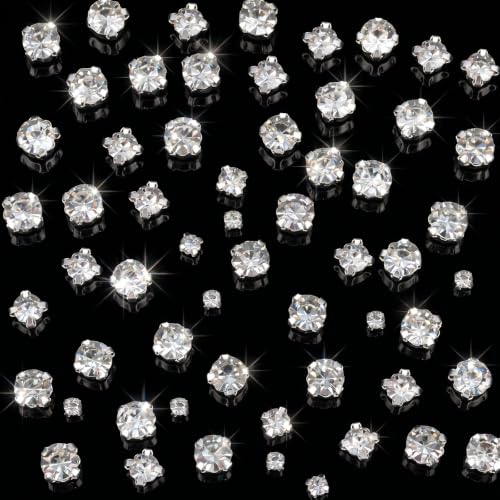 MEUYSIAC
400 pcs · glass
$7.49
View on AmazonPrices as of October 9, 2026 and subject to change.
A flexible, clear-drying glue put on the stone itself with a toothpick. Solvent glue can mark fine tulle, so test on a cut-off first.
Small scattered stones can be glued. Anything with weight — appliques, large crystals — should be sewn so the stitches carry it.
A scattered design is about 800 at 3 mm. Dense coverage is rare: the weight stops the veil moving.
We may earn a commission when you buy through these links, at no extra cost to you. How we choose products